

If you’ve ever stood in the middle of your kennel wing during peak hours and thought, “There has to be a better way to manage this noise,” you’re not alone.
Choosing between glass kennel doors and rod kennel doors isn’t about aesthetics. It’s about solving real operational problems: chain-reaction barking, sanitation bottlenecks, anxious boarders, ventilation concerns, staff fatigue, and client perception during tours.
After working with boarding facilities, doggy daycare providers, and animal shelters across the country, we’ve seen one consistent truth: The “right” kennel door is the one that supports how your facility actually runs and not just how it looks on paper.
At Direct Animal, we manufacture commercial-grade dog kennel doors and modular systems designed specifically for high-traffic animal care environments. Here’s how experienced operators evaluate the decision.
Glass vs. Rod Kennel Doors: The Real Operational Question
Most first-time buyers ask, “Which one is better?”
Seasoned facility owners ask different questions:
- Will this reduce barking during peak hours?
- Will it slow down or speed up cleaning?
- How will this look during a client walkthrough?
- Will my staff thank me in six months?
That’s the real glass vs rod kennel doors conversation. Visibility changes behavior. Surfaces change sanitation time. Design influences stress levels. And all of that affects your daily workflow.
Glass Kennel Doors — When Calm and Presentation Matter Most
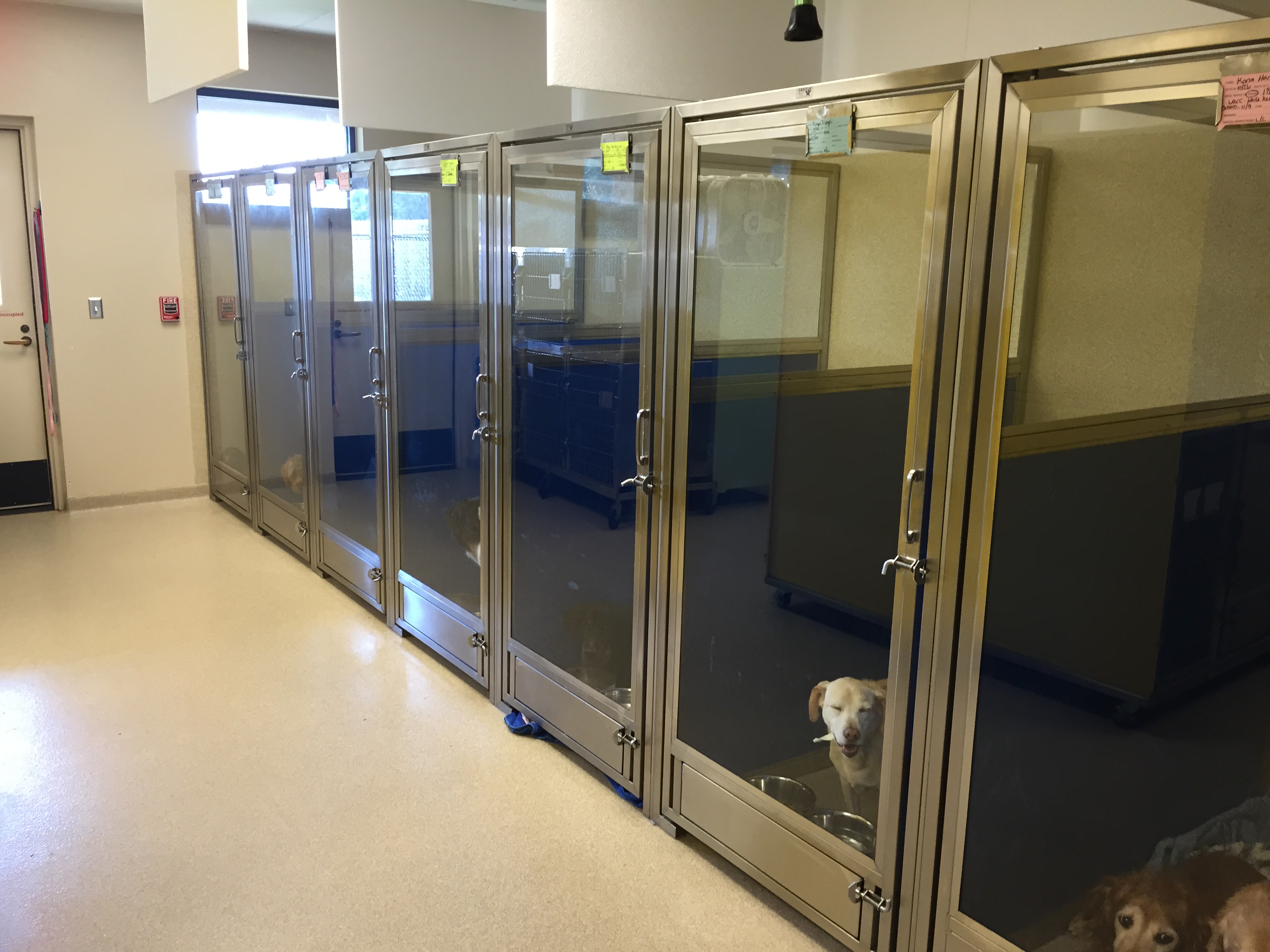
Glass kennel doors are often chosen by facilities that have already experienced noise escalation problems.
If you’ve dealt with one dog starting to bark and watching it ripple down the entire row, you understand how visual stimulation fuels reactivity. Solid panels reduce direct eye contact between neighboring dogs. In many populations, especially anxious, long-stay, or first-time boarders, that reduction alone can noticeably lower overall noise levels.
We’ve seen luxury boarding operators transition to glass after realizing that constant overstimulation was affecting both dogs and staff morale. When the environment becomes calmer, everything runs more smoothly, from feeding to medication rounds.
Glass also changes how your facility feels to clients. When pet parents walk through your boarding wing, they’re evaluating cleanliness and stress levels instantly. Smudge-free glass presents as modern, controlled, and hygienic. Staff can visually assess each dog without triggering excitement at the door, which improves both efficiency and safety.
Of course, experienced managers know that glass requires consistent wipe-downs. Nose prints and splatter are more visible. But the flip side is that smooth, non-porous surfaces disinfect quickly and thoroughly. With disciplined protocols, sanitation remains efficient.
Glass kennel doors are particularly effective in:
- Client-facing boarding wings
- Quiet or recovery areas
- Long-stay or anxious dog housing
- Facilities branding themselves as premium or low-stress
They integrate especially well with thoughtful layouts that include solid panels or dog room dividers to further reduce visual triggers. For facilities prioritizing calm containment and presentation, glass becomes more than a design choice; it becomes a management tool.
Rod Kennel Doors — Built for Throughput, Durability, and Airflow
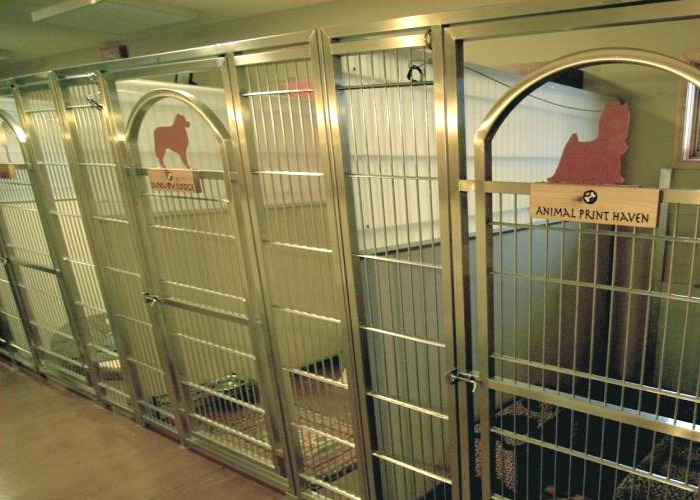
Rod kennel doors remain a trusted solution in high-demand environments for a reason. In intake-heavy shelters, municipal facilities, and high-turnover boarding operations, durability often outweighs presentation. Stainless steel or powder-coated rod doors withstand repeated impact, heavy cleaning, and constant use. If your reality includes energetic dogs jumping, leaning, or pawing at doors throughout the day, rod construction provides long-term resilience.
Airflow is another practical consideration. While full-building ventilation depends primarily on HVAC design, rod kennel doors allow open-air movement at the run opening. In older facilities or high-density housing situations, that added openness can be helpful.
That said, experienced operators recognize the tradeoff: increased visibility can increase stimulation. In reactive populations, one excited dog can trigger a wave of barking across the wing. Without additional visual barriers, noise management becomes more challenging.
Rod kennel doors tend to perform best in:
- Intake or short-term holding areas
- Back-of-house or operational wings
- High-energy daycare runs
- Facilities prioritizing rugged longevity
Many organizations using modular animal shelter kennels adopt a strategic approach — rods where durability is critical, glass where calm matters most.
What Actually Changes in Day-to-Day Operations
Here’s what we consistently hear from facility managers after installation. With glass kennel doors, noise levels often stabilize in populations prone to visual reactivity. Staff reports fewer “barking cascades” during feeding and walk-throughs. Tours feel calmer and more controlled.
With rod kennel doors, teams appreciate the ruggedness and straightforward function, particularly in intake or overflow areas where high turnover demands efficiency and resilience.
Cleaning protocols differ, but neither option is inherently slower. Glass shows smudges quickly, which prompts frequent wipe-downs. Rod doors require careful rinsing and sanitation between bars and contact points. The determining factor is not the door; it’s your cleaning system and staff training.
The key takeaway: the door should support your workflow, not complicate it.
The Strategic Answer: Hybrid Door Configurations
In reality, many well-run facilities don’t choose one or the other. They use glass kennel doors in quiet wings and client-facing areas to support calm behavior and presentation. They use rod kennel doors in intake, overflow, and high-wear operational zones where durability matters most.
Because Direct Animal builds modular systems, you can integrate multiple kennel doors within the same layout. That means you don’t have to replace your entire kennel system to refine performance in specific areas. This phased, strategic approach is often the smartest long-term investment.
Build a Smarter, Calmer Facility With Direct Animal
If you’re evaluating glass vs rod kennel doors, you’re likely facing one of three challenges: rising noise levels, sanitation inefficiencies, or a facility upgrade that needs to align with your brand.
We’ve worked with boarding operators, shelters, and daycare providers who have faced all three.
At Direct Animal, we design and manufacture professional-grade kennel systems engineered for high-traffic animal care. From fully customizable animal shelter kennels to durable dog kennel doors, our equipment is built for long-term performance, efficient cleaning, and real-world durability. Whether you’re renovating one wing or building a new facility from the ground up, we can help you design a configuration that supports your dogs, your staff, and your long-term operational goals. Because the right kennel door isn’t just hardware. It’s part of how your facility functions every single day.